Maintaining HVAC Performance To Secure The Best Real Estate Price
Maintaining Peak HVAC Performance To Secure The Best Real Estate Price
Introduction
When homeowners think about boosting their property’s resale value, their minds usually jump to fresh paint, updated kitchens, or a well-manicured lawn. These upgrades matter, but there is a quieter, less glamorous factor that can make or break a sale: the condition of the home’s HVAC system. Heating, ventilation, and air conditioning equipment rarely gets the spotlight, yet it sits at the center of a buyer’s comfort, health, and monthly budget. A system that hums along efficiently signals a well-cared-for home. One that rattles, leaks, or struggles to keep rooms at a steady temperature raises red flags before a buyer even steps past the entryway.
Real estate agents will tell you that buyers form impressions within the first few minutes of a walkthrough. If the air feels stale, a room is noticeably warmer than the rest of the house, or a strange odor lingers, that impression sticks. Home inspectors dig even deeper, checking the age of the furnace, the condition of the coils, and whether the ductwork has been properly maintained. Any of these details can become a bargaining chip that shaves thousands off an asking price or, worse, sends a buyer looking elsewhere.
This article walks through why HVAC performance is directly tied to real estate value, what specific maintenance tasks matter most, how a well-maintained system affects negotiations and inspections, and practical steps sellers can take in the months before listing their home. Whether you are planning to sell next year or next month, understanding this connection can help you protect your investment and walk away with a stronger final offer.
Why HVAC Condition Directly Influences Property Value
Buyers today are more informed than ever. Many walk into a showing already armed with knowledge about the average lifespan of a furnace or air conditioner, and they know that replacing one is not cheap. A residential HVAC replacement can run anywhere from several thousand to well over ten thousand dollars depending on the size of the home and the type of system installed. When a buyer suspects they will need to budget for that expense soon after moving in, they will factor it into their offer, and rarely in the seller’s favor.
Appraisers also weigh mechanical systems when determining a home’s market value. While an appraisal focuses primarily on comparable sales, functional building components including HVAC systems contribute to the overall condition rating of the property. A home listed as being in “excellent” or “good” condition typically commands a higher price per square foot than one rated as “fair” or “needing updates.” An aging or poorly maintained HVAC system can quietly pull a home’s condition rating down, even if everything else about the property looks pristine.
There is also the energy efficiency angle. Homes with modern, well-tuned systems tend to have lower utility bills, and buyers increasingly ask about average monthly heating and cooling costs during showings. A system that has been neglected often runs less efficiently, forcing the compressor or blower motor to work harder to reach the same comfort level. That translates into higher bills, which buyers factor into their long-term cost of ownership calculations. In competitive markets where multiple homes are similarly priced, the one with demonstrably lower utility costs and a documented maintenance history often wins.
Finally, indoor air quality has become a much bigger consideration for buyers, particularly those with children, allergies, or respiratory conditions. A system that has not been serviced regularly can circulate dust, allergens, and even mold spores throughout the home. Buyers who notice musty smells or visible dust buildup around vents may question what else has been overlooked in the property’s upkeep.
Essential Maintenance Practices That Protect Resale Value
Keeping an HVAC system in peak condition does not require an overwhelming amount of effort, but it does require consistency. Sellers who stay on top of a handful of core tasks throughout the year put themselves in a much stronger position when it comes time to list.
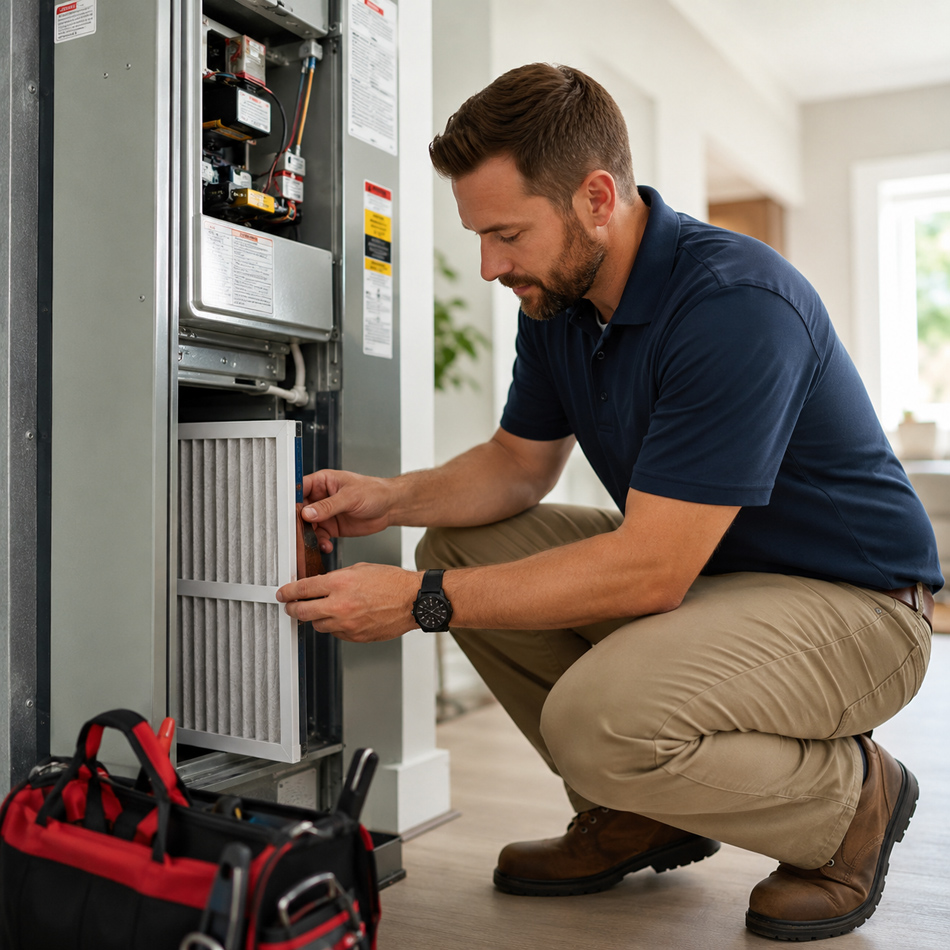 Regular filter changes. This is the simplest and most overlooked task. A clogged filter restricts airflow, forces the system to work harder, and can shorten the lifespan of the blower motor. Filters should generally be replaced every one to three months depending on the type of filter and whether pets are in the home. This single habit alone can prevent a cascade of larger mechanical issues.
Annual professional tune-ups. Scheduling a licensed technician to inspect the system once a year, ideally before the heavy heating or cooling season begins, catches small problems before they become expensive repairs. Technicians check refrigerant levels, inspect electrical connections, clean coils, and test thermostat calibration. A documented service history is something sellers can hand directly to a buyer or their agent, and it speaks volumes about how the home has been cared for overall.
Keeping outdoor units clear. Condenser units need adequate airflow to function properly. Leaves, grass clippings, dirt, and overgrown shrubs around the unit can restrict airflow and cause the system to overheat or underperform. A quick seasonal cleanup around the outdoor unit is a low-cost task that pays off in system longevity.
Sealing and insulating ductwork. Leaky ducts can lose a significant portion of conditioned air before it ever reaches the living space, forcing the system to run longer to maintain a comfortable temperature. Sealing gaps and ensuring ducts running through unconditioned spaces like attics or crawl spaces are properly insulated improves efficiency and evens out temperatures across the home, something buyers notice immediately during a walkthrough.
Addressing airflow and odor issues promptly. If certain rooms consistently feel warmer or cooler than others, or if there is a persistent smell coming from the vents, these issues deserve attention rather than being ignored. Balancing dampers, checking for blockages, or arranging one of the many available duct cleaning services can resolve these problems before they become the kind of detail an inspector flags in a report.
Replacing aging thermostats. A modern programmable or smart thermostat is a relatively inexpensive upgrade that signals to buyers that the home’s systems are current. It also gives sellers useful data on energy usage patterns, which can be a helpful talking point during showings.
Taken together, these habits do more than keep a household comfortable. They create a paper trail and a physical condition that supports a higher asking price and reduces the odds of last-minute negotiation setbacks.
How HVAC Condition Shapes Inspections and Negotiations
Home inspections are one of the most common points where deals slow down or fall apart entirely, and HVAC issues are among the most frequently cited findings. An inspector will typically check the age of the system, look for signs of rust or corrosion, test that both heating and cooling functions operate correctly, examine the condition of visible ductwork, and note whether there is adequate airflow throughout the home. Any red flags in this section of the report tend to catch a buyer’s attention quickly, since HVAC repairs are widely understood to be costly.
When an inspection report flags a struggling or outdated system, buyers generally respond in one of three ways. Some will ask the seller to complete repairs or replace the unit before closing. Others will request a credit at closing to cover the anticipated cost, effectively lowering the sale price. And in more cautious markets or with more risk-averse buyers, some will simply walk away from the deal entirely, especially if other comparable homes on the market do not carry the same concern.
Sellers who have kept up with maintenance and have documentation to prove it are in a much stronger negotiating position. A folder or digital file containing service records, filter change dates, and any warranty information for the system reassures buyers that they are not inheriting a ticking time bomb. It can also help justify a higher listing price, since buyers are effectively purchasing peace of mind along with the property.
On the flip side, a system that is near the end of its expected lifespan, even if it is technically still functioning, often becomes a point of leverage for buyers during negotiations. It is common for buyers to request a pre-emptive discount simply based on the age of the unit, regardless of whether it is currently working well. Sellers who replace or thoroughly service an aging system before listing often find that the upfront cost is more than offset by a smoother negotiation process and a higher final sale price.
Preparing Your HVAC System Before Listing Your Home
Timing matters when it comes to pre-sale HVAC preparation. Ideally, sellers should begin addressing their system’s condition three to six months before listing, giving enough time to schedule inspections, complete any necessary repairs, and gather documentation without the pressure of an looming closing date.
The first step is a comprehensive professional inspection, separate from the one a buyer’s inspector will eventually conduct. This gives sellers a clear picture of the system’s current condition and allows them to address issues on their own terms rather than reacting to a buyer’s demands later. If the inspection reveals aging components, worn belts, weak capacitors, or inefficient airflow, these can often be resolved for a fraction of what a full system replacement would cost.
Next, sellers should gather and organize all available documentation, including installation dates, warranty paperwork, and records of past repairs or servicing. Buyers and their agents appreciate transparency, and a well-organized maintenance history can be a genuine selling point highlighted in listing descriptions or during showings.
It is also worth considering small, visible upgrades that buyers notice immediately. Clean, dust-free vents, a tidy area around the outdoor unit, and a modern thermostat all contribute to a strong first impression. These are relatively low-cost changes that pay dividends when a buyer is mentally comparing your home to others on their shortlist.
Finally, sellers should think about seasonal timing. If listing during the summer, make sure the air conditioning has been recently serviced and is blowing consistently cool air throughout the home. If listing in colder months, the same applies to the heating system. Buyers touring a home will almost certainly test the thermostat, and a system that responds quickly and evenly reinforces the sense that the home has been well cared for.
Conclusion
An HVAC system may not be the flashiest feature of a home, but it plays an outsized role in how buyers perceive value, comfort, and long-term cost of ownership. From influencing appraisal condition ratings to shaping the outcome of inspections and negotiations, a well-maintained system quietly supports a stronger sale price at every stage of the process. Simple, consistent habits, regular filter changes, annual tune-ups, clear outdoor units, sealed ductwork, and prompt attention to airflow or odor issues, add up to a home that feels move-in ready rather than a project waiting to happen.
If you are thinking of Selling click here for a FREE PROPERTY APPRAISAL